
Hole Grid Vacuum Table Setup Instructions
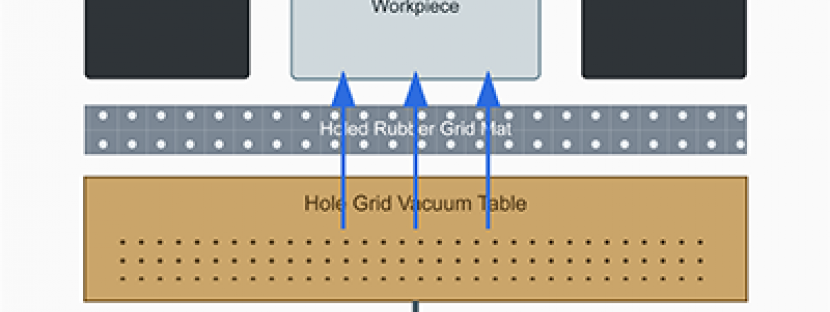
Hole grid vacuum tables distribute vacuum through a large number of small holes across the table surface. This design allows very fast setup and flexible positioning of the workpiece.
To achieve the best clamping performance it is important to use the supplied holed rubber grid mat (10 mm grid) and rubber cover mat correctly.
1. Connect the vacuum source
Connect the vacuum pump, Venturi or other vacuum generator to the main connection port of the vacuum table or manifold.
Ensure the hose connection is airtight and properly secured to prevent vacuum loss.
2. Place the holed rubber grid mat
Place the supplied holed rubber mat with 10 mm grid directly on top of the vacuum table surface.
- align the mat with the hole pattern of the table
- ensure the mat lies flat without folds
- the holes in the mat allow vacuum to pass through to the workpiece
3. Position the workpiece
Place the workpiece directly on top of the rubber grid mat.
The grid mat distributes vacuum beneath the workpiece and allows airflow between the table and the material.
Using the Cover Mat
Hole grid tables contain many open holes. If large areas of the table remain uncovered, air will enter the system and reduce vacuum performance.
To minimise leakage, use the supplied rubber cover mat to block unused areas of the table.
- place the cover mat over areas of the table not covered by the workpiece
- leave only the required clamping area exposed
- this significantly improves vacuum efficiency
Important: Airflow requirement
Because unused holes remain open, hole grid vacuum tables may experience some air leakage.
For this reason, the vacuum source must provide sufficient airflow capacity to maintain stable clamping force.
Installation Checklist
- connect vacuum pump or Venturi securely
- place the holed rubber grid mat on the table
- position the workpiece on the mat
- cover unused table areas with the rubber cover mat
- ensure all hoses and fittings are airtight
Tips for Best Performance
- ensure the workpiece surface is flat
- avoid leaving large areas of uncovered holes
- use the cover mat when working with smaller parts
- confirm the vacuum pump is suitable for the table size
Summary
Hole grid vacuum tables provide extremely fast setup and flexible workpiece positioning. The holed rubber grid mat distributes vacuum beneath the workpiece while protecting the table surface.
Using the rubber cover mat to block unused holes improves vacuum efficiency and ensures the strongest possible clamping force.
Read our guide: Which vacuum pump should I use?