CNC Clamping Thailand

Menu
Menu
Shopping cart
Our step by step process, ensures we meet your needs. Our team will guide you through and with a final CAD drawing for your review before we even start manufacturing.
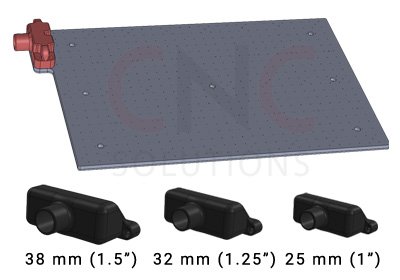
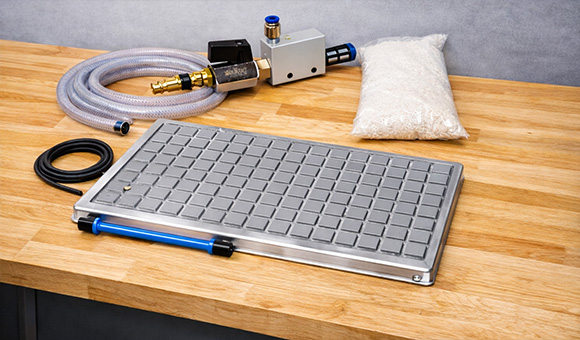
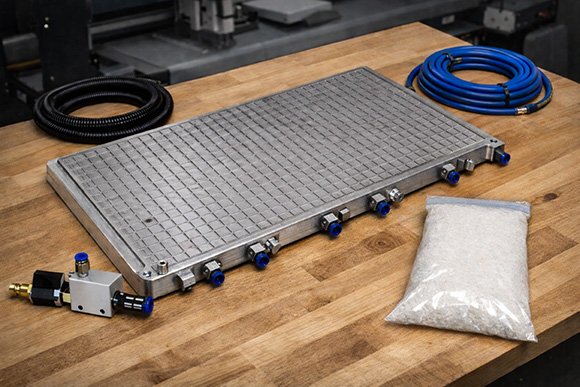
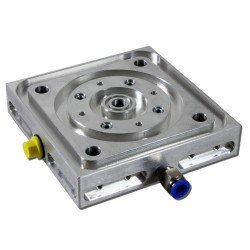
The slimline vacuum table series are just 11 mm thick with minimal generator requirement (shop vacuum cleaner) and feature a 20 x 20 mm hole grid with 3D printed port (in a various sizes). Includes mounting holes suitable for t-slot plates, mats and clamping fleece.
Thailand supplier of CNC clamping solutions.
German engineered with precision and quality.
Vacuum tables, t-slot plates, pumps & more.
German engineered with quality and precision
Flexible payment options available

Vacuum clamping

German engineered vacuum clamping solutions for the machining of
metals, wood, plastics, papers, films and foils with precision accuracy.

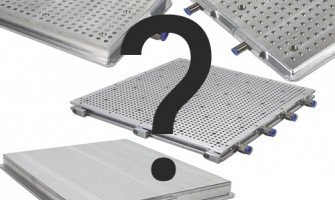
Read our guide on which vacuum table is right for you?
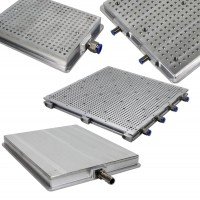
Manufactured in Germany our tables are renown for their quality and precisi..
If one of our vacuum tables doesn't fit your requirements our vacuum pads a..
The Vacuum Press Series are an easily retrofitted solution allowing you to ..
Our X-VAC C45 carbon steel hybrid clamping system is ideal for heavy duty m..
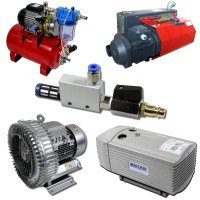
Our range of industrial vacuum pumps and generators compliment our vacuum t..

Grid vacuum tables

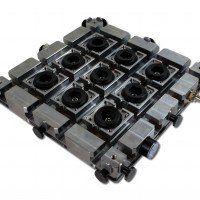
A grid table is ideal for machining simple to complex workpieces and gives you a high level of precision with the added flexibility vacuum clamping tables provide.

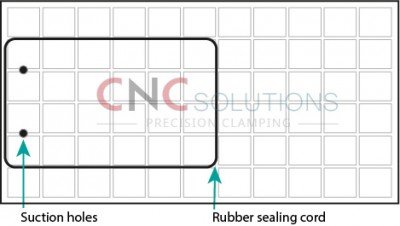
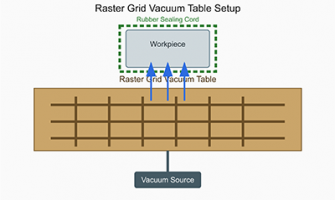
In order to maintain a high level of clamping force with complex parts sealing cord is positioned close to openings and recesses to minimise any vacuum loss.

For smaller workpieces the addition of a PVC mat ensures a secure and strong hold during machining.

Our series of grid vacuum tables fit most budgets.

View our grid vacuum tables

Hole grid vacuum tables
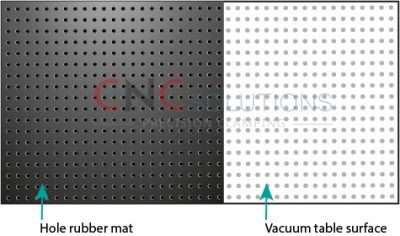
Our hole grid vacuum tables give you the greatest level of flexibility.

You can mill all the way through, cutting parts in a single procedure.

Inclusion of a holed rubber mat ensures a suitable vacuum seal around your workpiece.

In order to generate enough clamping force these tables must be used with a suitable vacuum pump.

View our hole grid vacuum tables.

Hole Grid or Grid Matrix Vacuum Table?

Compare the key differences between hole grid and grid matrix vacuum tables, including setup speed, sealing method, vacuum efficiency and holding force.

GR / GAL Series
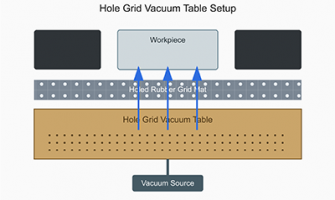
Workpiece Vacuum Source

Hole Grid

A versatile vacuum table with evenly distributed holes across the surface, allowing quick loading and flexible workpiece positioning.

  • Fast setup
  • Good for thin sheets
  • Ideal for changing part sizes
  • Well suited to laser applications

Best for: thin plastics, sheet materials and fast changeovers

Browse GR / GAL Tables
RAL / RAL Pro Series
Workpiece Vacuum Source

Grid Matrix

A channel-based vacuum table using sealing cord to create a closed vacuum zone for stronger, more efficient workholding.

  • Stronger holding force
  • Improved vacuum efficiency
  • Uses sealing cord around the part
  • Excellent for routing and milling

Best for: CNC routing, milling and stronger workholding

Browse RAL / RAL Pro Tables

View the full comparison with diagrams, advantages, disadvantages and a buyer guide.

View Full Comparison

Slimline vacuum tables

The new Slimline vacuum table series our most flexible and cost effective vacuum clamping solution yet!

Huge clamping force - Due to a height of 11 mm, a 20 x 20 mm grid of 0.6 mm holes our slimline tables are able to maintain a high air flow over its surface area.

Lateral port - Made from thermoplastic PLA our heavily tested and rigid 3D printed connector port can be supplied in a range of sizes; 25 mm (1"), 32 mm (1.25") and 38 mm (1.5").

Cost effective - The slimline series means you don't have to use a vacuum pump with a high airflow to achieve results in fact a shop vacuum cleaner is likely to be enough.

View Slimline Vacuum Tables Series

Vacuum Pads

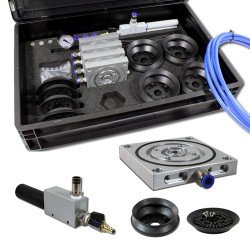
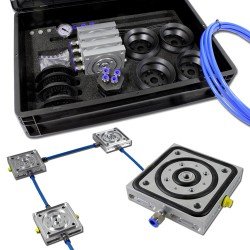
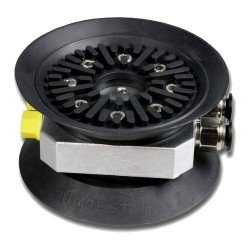
Position pads around your workpiece to vacuum clamp where separation distance between t-slot plate is necessary.

Model: VE1212KIT1
The VacEasy 1212 vacuum pad kit is an all-in-one simple and flexible clamping solution particularly for wood, plastics and light metals. This kit has..
US$ 890.00
Add to Cart
Model: VE1212KIT2
The VacEasy 1212 vacuum pad vac kit is an all-in-one simple and flexible clamping solution particularly for wood, plastics and light metals. It has e..
US$ 690.00
Add to Cart
Model: VP1515VE
The vacuum pad 1515 VacEasy is an easily expandable cast aluminium pad with rubber cord groove (10 mm) and 4 x M6 steel threads on all sides. Use..
US$ 140.00
Add to Cart
Model: VP115DVE
The vacuum pad 115D VacEasy a double sided cast aluminium suction pad each with a 110 mm diameter.Each side being able to suction independently. Total..
US$ 140.00
Add to Cart
Vacuum press

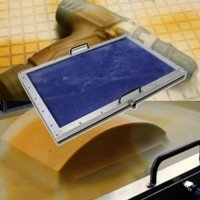
Vacuum clamp virtually anything regardless of shape. Our vacuum press series easily retrofit onto our vacuum tables.

Model: VP-4030
The vacuum press 4030 is an easily retrofitted aluminium frame consisting of a rubber membrane with a 500% fracture strain (ratio between changed leng..
US$ 450.00
Add to Cart
Model: VP-5050
The vacuum press 5050 is an easily retrofitted aluminium frame consisting of a rubber membrane with a 500% fracture strain (ratio between changed leng..
US$ 490.00
Add to Cart
Model: VP-6040
The vacuum press 6040 is an easily retrofitted aluminium frame consisting of a rubber membrane with a 500% fracture strain (ratio between changed leng..
US$ 510.00
Add to Cart
Model: VP-8060
The vacuum press 8060 is an easily retrofitted aluminium frame consisting of a rubber membrane with a 500% fracture strain (ratio between changed leng..
US$ 750.00
Add to Cart

T-Slot Plates

Tolerance / Precision
Aluminium+/- 0.01 mm / 200 mm
Steel+/- 0.05 mm / 200 mm

Our standard T-slot plates have a thickness of 20 mm, but we also offer options up to 40 mm. For even thicker plates, we provide custom sizes with an additional lead time of just one week.

Contact us today for your custom request.

Aluminium T-Slot Plates

All in One Kits

All in one vacuum clamping kits with you with everything you need.
Our kits are designed to fit most budgets from CNC amateurs to professionals.
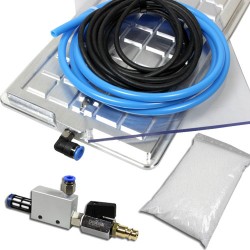
Model: STARTERKIT2012
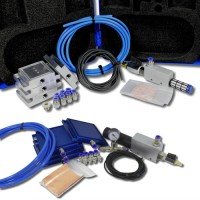
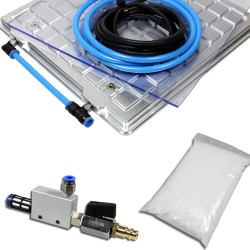
The Starter kit 2012 is an all-in-one solution with everything you need to start vacuum clamping. Simply connect your R Series table to the Venturi u..
US$ 220.00 US$ 300.00
Add to Cart
Model: STARTERKIT2020
The Starter kit 2020 is an all-in-one solution with everything you need to start vacuum clamping. Simply connect your R Series table to the Venturi u..
US$ 290.00 US$ 350.00
Add to Cart
Model: STARTERKIT3015
The Starter kit 3015 is an all-in-one solution with everything you need to start vacuum clamping. Simply connect your R Series table to the Venturi u..
US$ 290.00 US$ 350.00
Add to Cart
Model: STARTERKIT3020
The Starter kit 3020 is an all-in-one solution with everything you need to start vacuum clamping. Simply connect your R Series table to the Venturi u..
US$ 320.00 US$ 390.00
Add to Cart
Model: PROKIT3020
The Professional 3020 kit is ideal for engravers and metal workers. An all-in-one solution with everything you need to start vacuum clamping. Simply ..
US$ 320.00 US$ 390.00
Add to Cart
Model: PROKIT4020
The Professional 4020 kit is ideal for engravers and metal workers. An all-in-one solution with everything you need to start vacuum clamping. Simply ..
US$ 500.00 US$ 590.00
Add to Cart
Model: PROKIT4030
The Professional 4030 kit is ideal for engravers and metal workers. An all-in-one solution with everything you need to start vacuum clamping. Simply ..
US$ 560.00 US$ 621.00
Add to Cart
Model: PROKIT5030
The Professional 5030 kit is ideal for engravers and metal workers. An all-in-one solution with everything you need to start vacuum clamping. Simply ..
US$ 800.00 US$ 885.00
Add to Cart

Knowledgebase

Find answers to common questions.
Discover which clamping solution is best for you.
0 16611
Upgrade your workholding with custom T-slot plates engineered for precision machining. At CNC Solutions, every plate is made to order—size, slot layout, hole pattern, and finish—to match your setup. Choose from two materials: tempered..
Duenpen 0 16419
Custom-made vacuum tables for your exact application In manufacturing and precision engineering, one size rarely fits all. Our custom vacuum tables are built to your drawing and specification—so you get the hold-down performanc..
0 40345
Introducing our new slim line vacuum table series with a focus on low cost, high air flow with a minimal vacuum pump requirement. Our most versatile and cost effective vacuum table yet!It's low height of 11 mm and lateral 3D printed port connector se..
0 20781
Whatever you are machining, creating a firm hold on your part is essential to milling with flexibility and precision. Vacuum and mechanical clamping are two of the most common methods used each with their own advantages and disadvantages.Vacuum Clamp..
Adam 0 37665
With a wide selection of vacuum tables available, selecting the correct solution for your application can seem complex. In practice, most vacuum tables fall into two primary categories: Grid (Raster) and Hole Grid (Matrix). U..
Adam 0 19661
Although this may vary depending on your setup, the steps below provide a practical guide to get you up and running quickly. If you have a specific question not answered here, contact us or speak to us on live c..

Choosing the right vacuum table is one of the most important decisions when setting up a reliable vacuum clamping system. While both hole grid and grid matrix vacuum tables are designed to hold a workpiece securely using vacuum pressure, they work in very different ways and each has its own advantages depending on the application.

Our GR / GAL Series vacuum tables use a hole grid design, while our RAL / RAL Pro Series use a grid matrix system. Below is a clear breakdown of the main differences, together with the advantages, disadvantages and typical applications of each.

Quick Comparison

Feature Hole Grid (GR / GAL) Grid Matrix (RAL / RAL Pro)
Surface designUniform pattern of holes across the tableMachined grid channels / raster grooves
Sealing methodNormally no sealing cord requiredUses rubber sealing cord / gasket
Setup timeVery fastModerate
Vacuum efficiencyLower due to open holesHigher due to sealed vacuum zones
Holding forceGood for many sheet applicationsStronger concentrated clamping force
Pump requirementGenerally higher airflow requirementOften works efficiently with smaller vacuum sources
Best suited toLaser cutting, thin sheets, high-mix workRouting, milling, stronger workholding

Technical Diagram Comparison

Hole Grid Vacuum Table

GR / GAL Series

Workpiece Vacuum  Hole Grid / Hole Matrix Design Vacuum passes through many holes across the whole surface Open holes can cause leakage

In a hole grid design, vacuum is distributed through a large number of small holes across the table surface. This offers excellent flexibility and very fast setup, but unused holes may allow air leakage, increasing the airflow demand on the vacuum source.

Grid Matrix Vacuum Table

RAL / RAL Pro Series

Workpiece Vacuum  Grid Matrix / Raster Design Sealing cord creates a closed vacuum zone around the workpiece Rubber sealing cord

In a grid matrix design, the vacuum is channelled through machined grooves and sealed around the workpiece with sealing cord. This creates a more concentrated vacuum zone, improves efficiency and typically provides stronger holding force.

Main Differences Explained

1. How the vacuum is distributed

Hole grid tables distribute vacuum through a large number of holes across the complete working surface. Grid matrix tables distribute vacuum through internal channels or grooves within the table.

2. How the workpiece is sealed

Hole grid tables generally do not require sealing cord for standard use. Grid matrix tables rely on rubber sealing cord to define the active vacuum area around the part.

3. Vacuum leakage and efficiency

Because unused holes remain open, hole grid tables can experience more air leakage. Grid matrix tables are typically more efficient because the vacuum is concentrated only where it is needed.

4. Setup speed

Hole grid tables are generally quicker to use because the workpiece can be placed directly onto the table. Grid matrix tables often require sealing cord to be positioned first.

5. Holding force

Grid matrix tables usually provide stronger and more concentrated clamping force because the vacuum is sealed around the part. Hole grid tables are very versatile, but maximum holding force may be lower depending on coverage and airflow.

6. Best application type

Hole grid tables are well suited to thin sheets, laser cutting and frequent changeovers. Grid matrix tables are generally preferred for routing, milling and applications where stronger hold is required.

Advantages and Disadvantages

Hole Grid Vacuum Tables

GR / GAL Series

Advantages

  • Very fast setup with minimal preparation
  • Excellent flexibility for changing workpiece sizes and positions
  • Ideal for thin sheet materials and laser applications
  • Suitable when parts are regularly changed during production
  • Simple and intuitive to use

Disadvantages

  • Unused holes can create air leakage
  • Usually requires a vacuum source with higher airflow
  • Less efficient than a sealed vacuum zone
  • Holding force may reduce if the part covers only a small area

Grid Matrix Vacuum Tables

RAL / RAL Pro Series

Advantages

  • Higher vacuum efficiency due to sealed vacuum zones
  • Stronger and more concentrated clamping force
  • Often works with lower airflow vacuum systems
  • Excellent for routing, milling and machining operations
  • More controlled vacuum use around the workpiece

Disadvantages

  • Requires more setup time than a hole grid table
  • Sealing cord must be positioned correctly
  • Less convenient when part sizes change constantly
  • May be less practical for some very small or irregular jobs without suitable zoning

Typical Applications

Hole Grid Tables are often best for:

  • Laser cutting
  • Thin plastics such as acrylic, PETG and polycarbonate
  • Sheet material processing
  • Frequent job changeovers
  • Applications where setup speed matters most

Grid Matrix Tables are often best for:

  • CNC routing
  • Milling operations
  • Wood, aluminium and composite machining
  • Applications requiring stronger hold
  • Users wanting improved vacuum efficiency

Which Vacuum Table Should You Choose?

Choose a Hole Grid Table if:

  • You need fast loading and unloading
  • You work with thin sheets or lightweight materials
  • Your workpiece sizes and shapes change frequently
  • You use a laser or similar machine where quick flexibility matters

Recommended product families: GR Series and GAL Series

Choose a Grid Matrix Table if:

  • You need stronger holding force
  • You want improved vacuum efficiency
  • You run routing or milling applications
  • You are prepared for a little more setup in return for better sealing

Recommended product families: RAL Series and RAL Pro Series

Vacuum Table Selector

Vacuum Clamping Explained

Vacuum clamping works by removing air from beneath the workpiece, allowing atmospheric pressure to push the material firmly against the table surface. The more effectively the system can reduce leakage and maintain a sealed area, the stronger and more stable the holding force will be.

This is why table design matters. A hole grid system prioritises speed and flexibility by allowing the workpiece to be placed directly onto the table with minimal setup. A grid matrix system prioritises vacuum efficiency and holding strength by creating a defined sealed zone using sealing cord.

In practice, neither design is universally better than the other. The right choice depends on the machine, the material, the workpiece size, the level of vacuum available and whether speed or holding force is the main priority.

Vacuum Pump Sizing Guide

Vacuum table performance depends not only on the table design, but also on choosing a vacuum source suited to the amount of leakage and the size of the active area.

For Hole Grid Tables

Hole grid tables often require a vacuum source capable of handling more airflow because some holes may remain open during use. This makes airflow capacity particularly important, especially when working with smaller parts or parts that do not cover a large portion of the table.

For Grid Matrix Tables

Grid matrix tables generally use vacuum more efficiently because the work area is sealed. In many cases, this allows the use of smaller vacuum sources while still achieving strong holding force, provided the sealing cord is positioned correctly and the workpiece surface permits an effective seal.

As a general rule, if your setup has more leakage, you need more airflow. If your setup is well sealed, you can focus more on vacuum level and stability. For the best recommendation, table size, material type, workpiece dimensions and machining process should all be considered together.

Summary

If you need maximum flexibility, quick setup and an easy solution for sheet material handling, hole grid vacuum tables such as the GR and GAL Series are often the right choice.

If you need improved vacuum efficiency, stronger clamping force and better sealing for routing or milling applications, grid matrix vacuum tables such as the RAL and RAL Pro Series are usually the better option.

By understanding the differences between hole grid and grid matrix vacuum tables, it becomes much easier to select the right vacuum clamping solution for your machine, material and working method.

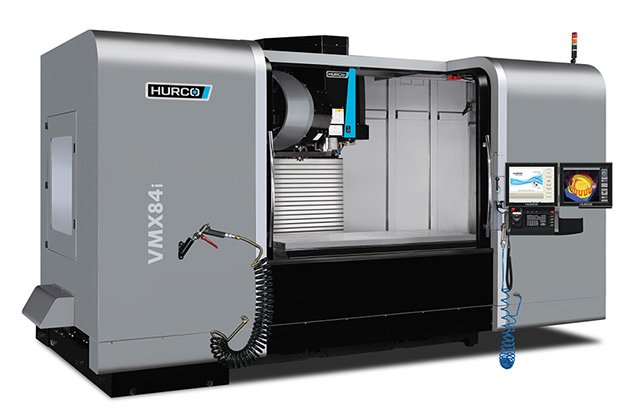
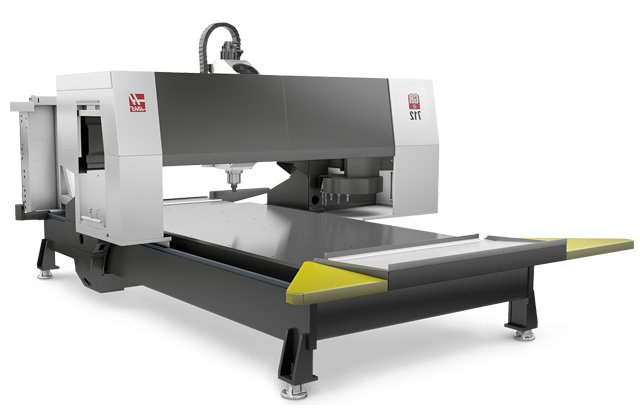
Our CNC Machines

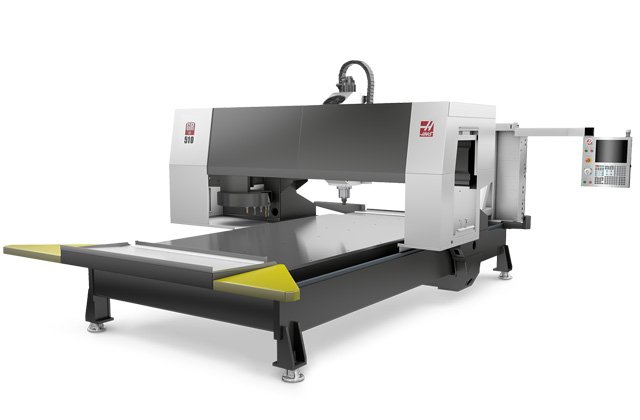
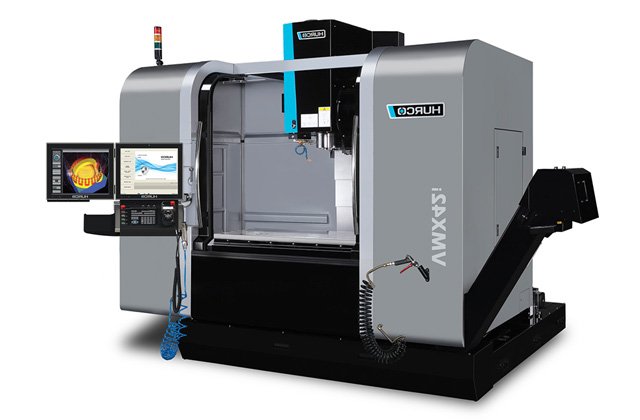
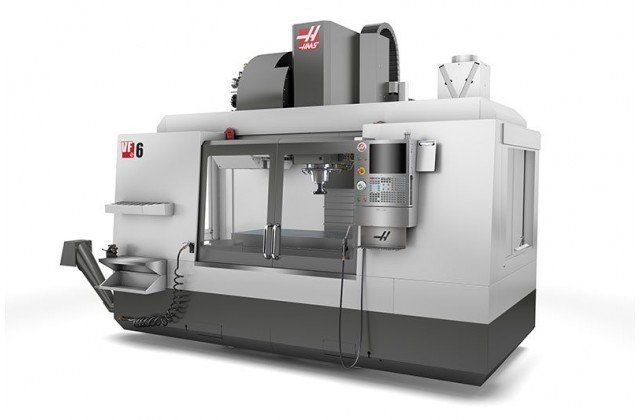
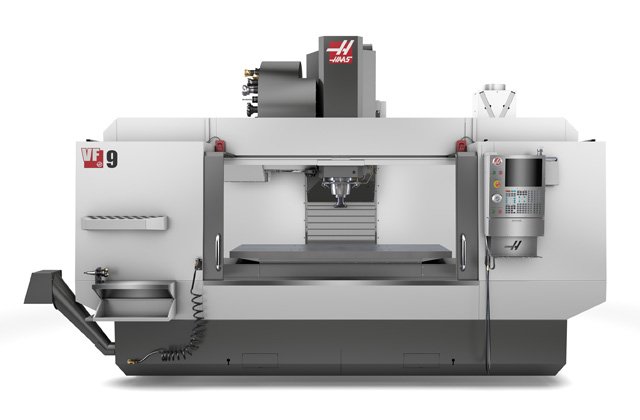
Used for the milling of aluminium & steel for our vacuum tables, t-slot plates and parts.

Steel CNC Milling Machines